<< >>

____________________________________________________________________________________________________________________________________________


Showing posts with label FOOD N HEALTH. Show all posts

Saturday, July 6, 2013

a garden diary / diario de un jardín

 photo DSC_0013_zpsb1536eb7.jpg  photo DSC_0021_zpscf9fcdc3.jpg

1. our artichokes are finally starting to bloom! / ¡nuestras alcachofas finalmente comienzan a florecer!
2. our sweet chickens / nuestras amadas gallinas


our garden loves the rainy season and each day there are more ways this wonderful blessing of a garden  provides for my family. so grateful.

nuestro jardín ama la época de lluvias y cada día hay más maneras en las que esta hermosa bendición de huerto provée para mi familia. tan agradecida.

Sunday, June 23, 2013

jam recipe / receta de mermelada

 photo mermelada7_zpsc8631292.jpg

i love fruit and making the most of it. my kids thoroughly enjoy when i sun dry fruit (and munching on them over a good book), and papa loves mama´s strawberry, blueberry, any-berry jam. after having searched high and low for a recipe that would not be complicated enough to scare me senseless with the commitment and time implied in the small letters (i´m not a big fan of complex anything), i finally found my comfort zone: a mixture of 1 particular recipe + suggestions from my favorite local-organic-french-farmer = easy, delicious jam. the reason why i´m crazy about making my own jam is because i can use it in many different recipes, i know it´s organic and made with love, and it´s not time consuming.

amo la fruta y aprovecharla al máximo. mis hijos disfrutan muchísimo cuando deshidrato fruta (y comerlos mientras leen un buen libro), y papá oso ama mi mermelada de fresa, zarzamora o cualquier fruta por el estilo. después de haber buscado por todos lados una receta que no fuera lo suficientemente complicada para sacarme corriendo para el lado opuesto por el compromiso y tiempo implicado en las letras pequeñas (no soy gran fan de nada complicado), finalmente encontré mi zona de confort: la mezcla de 1 receta en particular + sugerencias de mi granjero orgánico francés favorito = mermelada deliciosa y fácil. la razón por la cual me encanta hacer mi propia mermelada es porque la puedo usar en muchas distintas recetas, sé que es orgánica y hecho con amor, y toma muy poco tiempo.

 photo mermelada1_zps048a8b85.jpg  photo mermelada2_zps4d9fdf8a.jpg

 you will need:
  • fresh strawberries, blueberries, any berry (i like mixing a bunch of different berries together) preferably organic
  • unrefined brown sugar
  • vanilla extract (i make my own, but if you´re going to buy try finding one that is truly vanilla extract and not just a wanna be)
  • measuring cup
  • potato masher
  • pot
  • wooden spoon
  • glass jars, previously sterilized (re-use!)
note: amounts??? this is where the easy part begins. i just use as many berries as i can get my hands on. sometimes it´s a lot, sometimes it´s just enough for half a jar. not a problem. the trick is washing, cutting, and then mashing your fruit (with the potato masher) inside the measuring cup. not a must, but pretty convenient if you ask me (less washy washy for mommy thank ya verra much!). why, you say? because the amount of sugar you are going to need is just a quarter cup less than the amount of mashed berries you have. so if i have 2 cups of berries, i will only need 1 3/4 cups of brown sugar. easy! (but be sure to respect the formula, it´s what gives the jam it´s lovely consistency)

necesitarás:


  • fresas, moras o zarzamoras frescas (me gusta mezclar estas frutas) preferiblemente orgánicas
  • azúcar mascabado
  • extracto de vainilla (yo hago mi propia vainilla, pero si vas a comprarla trata de encontrar una que realmente sea extracto de vainilla y no solo un saborizante)
  • taza medidora
  • "aplasta papas"
  • olla
  • cuchara de madera
  • tarros de vidrio, previamente esterilizadas (¡re-usa!)
nota: ¿¿¿cantidades??? aquí es donde comienza lo fácil. simplemente uso tantas fresas (etc) que tenga a la mano. a veces es bastante, a veces solo es suficiente para medio tarro de vidrio. esto no es problema. el truco es lavar y  aplastar la fruta dentro de tu taza medidora. no es obligatorio, pero puede resultar bastante práctico si me preguntas a mi (¡menos mamita lave que lave, muchas gracias!). ¿porqué? porque la cantidad de azúcar que utilizarás es solo un cuarto de taza menor a la cantidad de fruta machucada que tienes. asi que si tienes 2 tazas de fruta, solo necesitarás 1 3/4 tazas de azúcar mascabado. ¡fácil! (pero asegúrate de respetar la formula, esto es lo que le da esa linda consistencia a la mermelada)


 photo mermelada3_zps4cc3d05a.jpg
 photo mermelada5_zps3ee925fa.jpg

jam making:
  • wash, cut and then mash your berries 
  • pour your mashed berries in your pot and put over low heat (stir constantly) until it starts to simmer
  • be sure to have your sugar ready to go (i just use the same measuring cup) because you´re going to need to pour it into the pot of berries as soon as they begin to simmer
  • continue to stir, keep heat low
  • once the sugar has melted and incorporated, add a drop or 2 of vanilla extract (i know, this is pretty random, but it really is just a dab and totally depends on how present you want the taste of the vanilla to be in your jam... i use more than i probably should. and love it.)
  • continue to stir (and stir...) while the fruit mixture boils until the froth on the surface begins to subside and the jam begins to shine... the glassy effect
  • now turn your stove off and go have a cup of tea, read a good book, crochet or do the laundry... totally up to you. you can basically forget about it for as long as you choose too, just let it cool.
  • once cooled, put over low heat again and stir until the jam boils once more. let it boil for a couple of minutes as you stir. done.
  • prepare your clean (sterilized) glass jars
  • pour in the hot jam
  • i let it cool completely (about 1 hour depending on the weather) before i put the lid on and store in the fridge. i usually make enough to last from 1 to 2 weeks, but if you want it to last longer there are excellent tips on canning and preserving here.
haciendo mermelada:
  • lava, corta y machuca tu fruta (fresas, zarzamoras, etc)
  • vierte tu fruta aplastada en la olla y calienta a fuego lento (moviendo constantemente) hasta que empiece a hervir suavemente
  • asegúrate de tener la azúcar a la mano (simplemente uso la misma taza medidora) porque necesitarás vertirlo en la olla de fruta en cuanto comience a hervir
  • continúa moviendo constantemente, mantén a fuego lento
  • una ves que el azúcar se haya derretido y se haya incorporad, añade una gota o dos de extracto de vainilla (sé que esto es poco claro, pero realmente pueden ser solo unas gotas y básicamente depende de cuan presente deseas que esté el sabor de la vainilla en tu mermelada... yo uso más de lo que seguramente debería. y me encanta.)
  • continúa moviendo la mermelada (y moviendo y moviendo...) mientras la mezcla de frutas hierve hasta que ya no haya espuma y la mermelada comience a brillar... un efecto vidrioso
  • ahora apaga el fuego y ve a tomarte una taza de té, leer un bueno libro, tejer o lavar algo de ropa... depende de ti. básicamente olvídate de ello por el tiempo que quieras, pero déjalo enfriar.
  • una vez que se haya enfriado, vuélvelo a calentar sobre fuego lento hasta que la mermelada comience a hervir una ves más. déjalo hervir por un par de minutos mientras la mueves. y fin.
  • prepara tus tarros de vidrio limpios (y esterilizados)
  • vierte la mermelada caliente
  • déjalo enfriar completamente (aproximadamente 1 hora, dependiendo del clima) antes de ponerle la tapa y guardar en el refrigerador. normalmente hago suficiente para durar 1 a 2 semanas, pero si quieres que dure más hay excelentes sugerencias sobre sellar al vacío aquí (en inglés).
 photo mermelada6_zps01caebb5.jpg

1 happy mama bear tip:
make your own delicious very berry organic yoghurt for breakfast in no time (way "yummier" than store bought flavored yoghurt) by just mixing the jam with organic, sugar free yoghurt and giving it a stir! you´ll be surprised how delish this can be!

una rica sugerencia de mama oso:
has tu propio delicioso yoghurt de frutas orgánicas para desayunar en menos de un minuto (muuucho más rico que el yoghurt de sabor que compras en un súper mercado) tan solo mezclando la mermelada orgánica con yoghurt natural! te sorprenderá lo delicioso que esto puede ser!

Sunday, June 2, 2013

questioning / cuestionando

 photo DSC_0041_zpsd38867db.jpg  photo DSC_0016b_zpsaddf6549.jpg  photo DSC_0048_zps2d2a4654.jpg  photo DSC_0013c_zps77d1bae6.jpg  photo DSC_0033_zpse88085d7.jpg  photo DSC_0043_zps99270e5e.jpg  photo DSC_0029b_zpsff6daafc.jpg  photo DSC_0022b_zps0e8fe5ee.jpg  photo DSC_0047_zps4316a2ab.jpg  photo DSC_0025b_zpsf2f9051a.jpg  photo DSC_0012_zpsa105b4c9.jpg  photo DSC_003b5_zpse1da2e36.jpg  photo DSC_0014c_zps67f93feb.jpg  photo DSC_0049_zpsad9eb250.jpg

questioning and meditating the why and how of what living on this beautiful planet is all about. my role as a mother, as a teacher, as a student, and my responsibility as such. i had the opportunity to watch Food Inc. the other day... and i ask myself, if my son was luckier than that sweet, innocent little boy mentioned in the film, having undergone the same suffering, the same symptoms, the same causes... what is my responsibilty as a mother. to just change my own life and that of my family? to care for only my children, and change whatever i must to not allow the system to continue to put my loved ones in danger? there´s too much my, my, mine going on here. maybe, i do owe life, and the fact that my sweet boy did survive, the responsibility of spreading the word. of letting other mothers and fathers know, there´s simply something not right about "normal". inviting other´s to question, to look for alternatives and stare all that is hidden behind "normal" straight in the face; observe the consecuences without that veil that "protects" us from the right to decide. i risk criticism or the bitter question, "well, what option are people that can´t afford to buy anything but fast food left with?". i´ll risk it. this is a reasonable question and everyone has the right to an opinion. but i think it´s important to not hoard information, but share. without knowledge the opportunity to question doesn´t even exist, and that is simply not ok.


cuestionando y meditando sobre el porqué y el cómo, y de lo que se trata vivir en este hermoso planeta. mi papel como madre, como maestra, como estudiante, y responsabilidad como tal. tuve la oportunidad de ver Food Inc. el otro día... y me pregunto, si mi hijo corrió con más suerte que ese dulce, inocente niño mencionado en la película, habiendo pasado por el mismo sufrimiento, los mismos síntomas, las mismas causas...¿cual es mi responsabilidad como madre? ¿el de simplemente cambiar mi vida y la vida de mi familia? ¿de cuidar de solo mis hijos y de cambiar lo que sea necesario para no permitir que el sistema siga poniendo a los míos en peligro? aquí hay demasiado mío, mío, yo. quizá sí le debo algo a la vida,  al hecho de que mi dulce niño sí sobrevivió. la responsabilidad de correr la voz. de dejar que otras mamás y papás sepan que hay algo terriblemente mal detrás de lo "normal". invitando a otros a cuestionar, a buscar alternativas y a mirar de frente todo aquello que esconde lo "normal"; observar las consecuencias sin aquel velo que nos "protege" del derecho a decidir. me arriesgo a la crítica o al amargo cuestionamiento, "¿y entonces, qué opción tiene la gente que no tiene dinero?". me arriesgaré. ésta es una pregunta razonable y todos tienen derecho a una opinion. pero considero importante no acaparar información, sino compartir. sin el conocimiento ni siquiera existe la oportunidad de cuestionar y eso simplemente no está bien.

Wednesday, May 22, 2013

burgers + cows

 photo DSC_0015_zps5772dfdf.jpg

(has click AQUÍ para la versión en español) 

My little girl is an infinite source of inspiration for both her father and me (as is our beautiful son). But they are also great teachers and the lessons they bring as gifts sometimes run deeper than any lesson ever learned. This time it was this little 7 year old angel´s moment to turn our world upside down, filling it with light. One day she was sitting in front of a homemade burger and couldn´t seem to get through lunch. I was staring at her and I suddenly noticed a change in the way she was looking at her plate. Her eyes shifted, as they do when she´s deep in thought, or finally figured out the answer to her math homework. She turned and looked at me, then said, "Mommy, are hamburgers  cows that people kill? ...cows that have babies?" My answer?, "Yes, sweetie". She then went on to declare,  "I´m going to be a vegetarian now". Now, don´t get me wrong, I have always been aware of the fact that a lot of the food eaten on a day to day basis are dead animals. I am also aware of the inhumane conditions in which these poor animals are treated for a juicy steak´s sake. But it never really hit home the way it should have until I saw the way my sweet little girl was experiencing the complete comprehension of what eating that burger truly implied. At home we usually ate chicken or fish 2 times a week. Red meat, once every blue moon. I tried to get my hands on organic meat, as if this would make things better. I cooked all vegetarian dishes one whole week and both my men (hubby and son) were not too happy. I gave up. I recognize the fruitlessness of trying to create true change in our home if papa isn´t on the same page as mama (and vice-versa).

But something happened that day little G seemed to connect burgers with cows and chicken fajitas with those animals living in our back yard. Both papa and mama saw that sense of anguish in her eyes, her disgust as she pushed her plate away, and the determination with which she announced her verdict. Something shifted. It´s now been a while since we last ate meat, a while since i began digging deep into different healthy vegetarian variations to life and yumminess, and the strength i find in knowing papa bear has my back is unequalled. This is something he wrote and posted on his facebook page the other day, I was compelled to translate and share.


It is proven that pigs are as intelligent or even more so than dogs. It is proven that cows have the ability to perceive what can harm them and what benefits them. Any of these farm animals are conscious of maternity and therefore of affection (this has at times been mistaken with the instinct to preserve their own species, the same instinct we all share). If this were so, then human maternity would be reduced to a mere basic instinct (which I believe to be true) but motherhood is also one of the greatest creative processes and is therefore one of the highest spiritual values. To treat pigs and cows as "food" and dogs as "companions" is the clearest proof of the perversity of our species.


I consider the premise that eating animals is "natural because this is how the food chain works" quite a  simplistic one, and a mere justification of the idea that we can do whatever we choose to because it is "our right". True enough, the animal kingdom revolves around food chains and without them our ecosystem would collapse. Nevertheless humans are not only animals, we are also the most evolved creatures on this planet, with abilities that the lion, the coyote and the eagle do not possess. These predators, like many others, have no other choice (and this is so for a reason) when it comes to obtaining food; they cannot sow, they cannot balance their diets, they cannot create technology to feed thousands of their own species, and therefore are  limited to the use of their own instincts that I would not qualify as cruel or evil, but necessary.


But humans have hidden behind this premise for thousands of years. We began as hunters and gatherers but there was a turning point in our evolution as a species: agriculture. We became agricultures and therefore sedentary. The concept of property was born and with time this concept evolved into the right to progress at any cost because nature would be "wild and inhabitable" if it were not for  the "marvels humans create". Man has found all sorts of ways to perpetuate his species and many of them are more destructive than the worst plagues that have befallen our planet.


As the master Seung Sahn said "human is number one bad animal".


We cannot justify that raising animals only to kill thousands of sentient beings daily is "natural" and part of the food chain because man lost direction when he became a farmer. Therefore not all we do is "natural", but rather cruel and  despicable. Why do I say humanity lost it´s way when we began farming? Because instead of understanding agriculture as a tool to create abundance and true advancement, we,  as a species, have tricked ourselves into believing that it is our responsibility to tame this planet by any means necessary beacause it´s rescources belong to us, therefore any action in the name of this purpose is valid and justifiable.


My point is that not everything "goes". That as beings with a brain and a nervous system as developed as ours our role on this planet is vital. This is not about being a vegetarian, or an activist, or a buddhist, or a socialist, we cannot continue to qualify or stereotype in order to justify actions that obey our need for pleasure over our call of conscience.

I remember an experiment that was done  with rats some time ago. They (the rats) were connected to electrodes that would stimulate the pleasure centers in their brain every time the rat triggered a button. It got to the point where they began to starve because they preferred pressing the button over eating... Are we all that different from those rats? Do we prefer pleasure over the truth of our conscience?

All beings are recipients of life, therefore all beings are sacred. Or is the life of a human being sacred (and so we believe) and that of a animal is not?

It is not true that humans need meat to survive. In India 90% of the population is vegetarian and regardless of the hunger problems that attack certain areas of the population (as is currently true in all countries) they are a healthy people with no nutritional deficiencies.

To continue to believe that eating meat is normal, acting oblivious to the cruelty that  our demand for it creates, only to satisfy our craving, is a very personal decision. If i decide not to eat meat it is because I do not wish to be a man that plays the perverse game of our system...The more I practice Metta (uncontitional love), aruna (infinite compassion) and mudita (altruistic happiness) the more I understand all those poor beings that are suffering and agonizing in the hands of other beings that are supposed to care for them. I will not participate because I love the divine gift of life given to us by God, and so I will love my Creator by loving all those beings that in His eyes are equal and without distinction. I do not speak of God in a monotheistic sense, I speak of the originator, of the creative force of all that is manifested, that force which is mother, father, sun,  moon, evil and good, that which is within us, and around us.

HUMANS ARE PROTECTORS OF ALL LIFE ON THIS PLANET, let us not act otherwise. We can decide and therefore we can discern. Now let´s do just that.

LOKAH SAMASTAH SUKHINO BHAVANTU (may peace and happiness prevail)

b.o.


Recognize meat for what it really is:  the antibiotic- and pesticide-laden corpse of a tortured animal. 
Ingrid Newkirk


Sunday, April 21, 2013

perfect sunday morning: organic pumpkin bread

mañanita de domingo perfecta: pan de calabaza orgánico 

 photo maminme_zps634912b7.jpg
 my favorite way of letting them know how my heart swells in warm sighs for them: 
mi manera favorita de hacerles saber cómo se hincha mi corazón de dulces suspiros por ellos:

you will need / necesitarás:
  • 1 1/2 cups organic whole wheat flour / 1 1/2 tazas de harina integral orgánica
  • 1 teaspoon organic salt / 1 chucharadita de sal orgánica
  • 1 cup  brown sugar / 1 taza azúcar mascabado
  • 1 teaspoon organic baking soda / 1 cucharadita polvo de hornear orgánico
  • 1 cup homemade organic pumpkin puree (room temp) / 1 taza puré de calabaza orgánico hecho en casa (a temperstura ambiente)
  • 1/2 cup organic coconut oil / 1/2 taza aceite de coco orgánico
  • 2 organic eggs (beaten) / 2 huevos orgánicos (batidos)
  • 1/4 cup water / 1/4 taza agua
  • 1/2 teaspoon cinnamon / 1/2 cucharadita canela
  • 1/2 teaspoon nutmeg / 1/2 cucharadita nuez moscada

making sweetness / creando dulzura:
  • preheat oven to 350°F / precalentar horno a 180ºC
  • in large bowl, mix together flour, salt, sugar, and baking soda / en un tazón grande, mezcla bien la harina, sal, azúcar y polvo de hornear
  • in a separate bowl combine pumpkin, coconut oil, eggs, water, and spices / en un tazón aparte combina el puré de calabaza, aceite de coco, huevos, agua y especies
  • combine "wet" ingredients with dry ingredients, do not overmix / combina los ingredientes "húmedos" con los secos, no batir demasiado
  • pour batter into a  9x5 inch loaf pan (previously greased with coconut oil or butter) / vierte la mezcla en un molde para hornear pan de 23x13 cm (previamente engrasado con aceite de coco o mantequilla
  • bake 50-60 minutes or  until a thin skewer poked in the very center of the loaf comes out clean / hornea por 50-60 minutos o hasta que un cuchillo insertado en el centro salga limpio
  • let cool on a rack then turn out of the pan / deja en friar sobre una tabla y después retíralo del molde
Note: I like using these mini loaf pans i have at home. If desired, you can bake your batter in muffin tins as well. They come out just as moist. If you use a muffin tin bake for 20-25 minutes, or 40-45 minutes when using mini loaf pans.

Nota: A mi me gusta usar unos moldes miniaturas que tengo en casa. Si deseas, también puedes utilizar moldes para muffins (o magdalenas). Salen igual de frescos. Si usas moldes para muffin, hornea por 20-25 minutos, o 40-45 mintuos si utlizas moldes de pan miniatura.
 photo DSC_0053_zpsbe7e7bb9.jpg

making your homemade pumpkin puree is easy and especially delish if you get your hands on a beautiful organic pumpkin. just chop into pieces (not an especially easy task... i sometimes just smash the old thing against the floor inside a bag or cloth), boil in water until the meat is nice and tender. let cool and then scrape the meat off the pumpkin shell into a food processor. i personally pour it all into a bowl and use my old immersion blender to make it nice and smooth. i like making a whole bunch and then freezing what i won´t be using at the moment, keeping it handy for the tons of delicious recipes that include pumkin puree!

hacer tu propio puré de calabaza es fácil y especialmente deicioso si consigues una calabaza orgánica. solo córtalo en pedazos (lo cual no es especialmente fácil...a veces solo azoto la cosa contra el piso en una bolsa o tela), hierve en agua hasta que la carne esté tierna. deja enfriar y después raspa la carne de la cáscara dejándolo caer en un procesador de alimentos. yo personalmente lo meto todo en un tazón y lo hago puré con mi licuadora manual hasta que quede una textura sedosa. me gusta hacer una gran cantidad y congelar lo que no voy a usar en el momento, ¡de esta manera lo tengo a la mano para la gran variedad de recetas deliciosas que incluyen puré de calabaza!

 photo DSC_0070_zps5105fbf6.jpg

Tuesday, April 9, 2013

a sweet celebration of spring / una dulce celebración de primavera

i am happy to announce that i have been invited to be a core contributor, writing for Voices from the Ville, Kidville´s new blog. i´ll be adding a bit of my green, simple, handmade outlook on life and am silly happy to share this first post inspired by spring with all of you!

estoy felíz de anunciar que he sido invitada a contribuír regularmente, escribiéndo para el nuevo blog de Kidville: Voices from the Ville. estaré añadiendo un poco de mi verde, simple y hecho a mano punto de vista ¡y estoy contenta de compartir este primer post, inspirada por la primavera, con todos ustedes!
 
 photo DSC_0117_zps9681e961.jpg
Spring is here and so is Mr. Sun. There is no better way to celebrate than with sweet little somethings to chew on. I like to involve my children in my acrobatics in the kitchen, especially when this leads me out into the garden, as it does when sun-drying fruits. My favorite fruits to sun-dry are apples and strawberries, and although getting this sweet and happy snack done requires some waiting, it is extremely easy. All you need is dry, hot weather, a drying rack and patience. Since I use only organic fruit I enjoy having my little missy either help me pick them from our garden, or accompany me to the farmers market and let her choose them herself. This way she feels like she´s truly a part of making such sweetness for the family. 

Ha llegado la primavera y con ella el Sr. Sol. No hay mejor manera de celebrar que con dulces alguitos para masticar. Me gusta involucrar a mis hijos en mis acrobacias en la cocina, especialemente cuando éstas me llevan al jardín, como sucede al deshidratar frutas al sol. Mis frutas favoritas para deshidratar son manzanas y fresas, y aunque llevar acabo este dulce refrigerio requiere de algo de espera, es extremadamente fácil de hacer. Lo único que necesitas es un clima seco y caluroso, una rejilla y paciencia. Ya que solo uso fruta orgánica, me gusta dejar que mi pequeña señorita me ayude a recolectarlos del jardín, o que los escoja ella misma en el mercado orgánico. De esta manera siente que realmente es parte de crear tánta dulzura para su familia.

 photo DSC_0098a_zps7c8b81ff.jpg
the easy-peasy-patience-taking how to:
  • wash your apples and strawberries
  • peel and core your apples (great tute on how to core apples here) then cut into slices, as thin as possible (don´t worry if your slice doesn´t come out whole), set aside
  • have the kids chop the strawberries (strawberries that are going to be sun dried are perfect for letting kids cut since they shouldn´t be thinly sliced - they get really sticky, and if they are too thin they stick to the drying rack)
  • lay your fruit out on your rack without overlapping, have the kids help (it´s sort of like putting a puzzle together)
  • set out to dry in the sun, this process could take up to a few days depending on the weather (do not leave out overnight)
  • make sure you turn your fruit over every now and then, and move the rack around so that it is directly under the sun for as long as possible
  • once you feel there is no humidity left in your fruit, store in a bottle at room temperature (you may find that not all your fruit finishes the drying phase simultaneously - some pieces may require being left out a bit longer - remember to be patient)
  • you can serve this yummy healthy snack alone, in oatmeal, or on top of cereal. Enjoy!

las instrucciones facilitas-pero-de-paciencia:
  • lava las manzanas y fresas
  • pela las manzanas y quítales el centro (maravilloso tutorial sobre cómo hacerlo aquí), después córtalo en rodajas, lo más delgado posible (no te preocupes si no salen enteras), dejar a un lado.
  • permite que los niñ@s corten las fresas (fresas que van a ser deshidratadas al sol son perfectas para que corten los niñ@s ya que no deben ser cortadas en piezas delgadas o chicas - se vuelven muy pegajosas y si están demasiado delgadas se pegan a la rejilla)
  • coloca tu fruta en la rejilla, sin sobreponer, que te ayuden los niñ@s (es como armar un rompecabezas)
  • coloca al sol, este proceso (el de la deshidratación) podría llevar hasta algunos días, dependiendo del clima (no lo dejes afuera por las noches)
  • asegúrate de voltear tu fruta de ves en cuando, y mueve la rejilla para que esté directamente bajo el sol la mayor cantidad de tiempo posible
  • una ves que sientas que ya no hay humedad en tu fruta, guárdala en una botella a temperatura ambiente (encontarás que no toda la fruta termina el proceso de deshidratación simultáneamente - algunos pedazos pueden requerir más tiempo al sol - recuerda ser paciente)
  • puedes disfrutar de esta delicia sola, en avena o encima del cereal. ¡A disfrutar!
 photo DSC_0084_zpsa9ff92e5.jpg
 photo DSC_0096_zps33594c38.jpg
 photo DSC_0087_zps309b961b.jpg

 photo DSC_0111_zps79049c2b.jpg photo DSC_0121_zps806a505c.jpg

About drying racks:
At home we like to use wooden racks or my favorite bamboo tray. What´s important is that you use something sanitary and safe. You can find helpful information about food drying and drying racks here.

Sobre las rejillas de deshidratación:
En casa nos gusta usar rejillas de madera o mi bandeja de bambú favorita. Lo que es importante es que utilices algo seguro y sanitario. No se deben utilizar rejillas de alambre común porque corre peligro de oxidarse. Puedes encontrar información útil sobre la deshidratación del alimento y las rejillas aquí (en inglés).


Sunday, April 7, 2013

simple pleasures + lazy muffins

 photo DSC_0152_zps4d092f0f.jpg
lazy muffins 1 photo DSC_0135_zpsd801e326.jpg
 photo DSC_0164_zps0ad6ce69.jpg
lazy muffins 5 photo DSC_0141_zps3c03cc7b.jpg
 photo soft_zpscea2f920.jpg
 photo DSC_0156_zpsec9c3033.jpg
 photo DSC_0145_zps85c9d8a0.jpg
lazy muffins 4 photo DSC_0139_zps19352848.jpg
 photo DSC_0155_zpse9ac67ad.jpg
 photo DSC_0161_zpsdddd1949.jpg
 photo DSC_0163_zps9b578d09.jpg
lazy muffins 3 photo DSC_0138_zpsb3b19c6b.jpg
loving our quiet times at home. reading to eachother, quitely walking through the garden, watching her play... she´s got me wrapped around her teeny finger this one. skinny legs and sweet little kisses are her trademark. she loves everything small and delicate, so i can´t help but want to make tiny little cocoa muffins just to see her smile.

little G got a little pink muffin maker for christmas and i make good use of this little machine whenever my familia feels like something sweet but mama has no intention of slaving over a well used and loved oven, or washing loads of yucky. this is the recipe for my favorite very lazy muffins:

estoy amando nuestros momentos tranquilos en casa. leyéndonos cuentos, caminatas calladas por el jardín, mirándola jugar... esta de aquí me tiene loca de amor. piernitas flacas y dulces besitos son lo que la distinguen. ama todo lo pequeño y delicado, así que no puedo evitar querer hornearle unas magadalenas de cocoa en miniatura solo para verla sonreír.

G chica recibió una linda maquinita rosa para hacer magdalenas esta navidad pasada y hago buen uso de ella cuando la linda familia tiene ganas de algo dulce pero mamá no tiene intenciones de escalvizarse sobre su bien amado y usado horno, o lavando kilos de fuchi. esta es mi receta favorita para mis magadelas de flojera:

ingredients / ingredientes:

  • 1 3/4 cups organic whole wheat flour / 1 3/4 tazas de harina integral orgánica
  • 1 1/2 teaspoons organic baking powder / 1 1/2 cucharaditas de polvo de hornear orgánico
  • 1/2 teaspoon organic sea salt / 1/2 cucharadota de sal orgánica
  • 2-3 spoonfuls organic cocoa powder / 2-3 cucharadas de cacao orgánico en polvo
  • 3/4 cups brown sugar / 3/4 tazas de azúcar mascabado
  • 2/3 cups rice or almond milk / 2/3 tazas de leche de arroz o almendras
  • 2 organic eggs, lightly beaten / 2 huevos orgánicos, ligeramente batidos
  • 125 gr. unsalted butter (melted and cooled) / 125 gr. mantequilla sin sal (derretida y a temperatura ambiente)
  • 1/2 teaspoon homemade organic vanilla extract / 1/2 cucharaditas extracto de vainilla orgánica hecha en casa
  • little bit of organic coconut oil (used for greasing the cupcake maker) / un poco de aceite de coco orgánico (utilizado para ligeramente engrasar maquinita)


6 easy steps to yummy / 6 pasos fáciles para llegar a sabroso:
  • preheat cupcake maker / calienta maquinita
  • lightly grease cupcake maker with coconut oil / engrasa ligeramente con aceite de coco
  • combine ingredients in large bowl and mix until there are no lumps / mezcla tus ingredientes en un tazón grande y bate hasta que esté libre de grumos
  • bake for 10-12 minutes (or until toothpick or knife comes out clean) / hornea por 10-12 minutos (o hasta que palillo o cuchillo salga limpio)
  • repeat until you´ve used up all your batter / repite hasta que hayas utilizado toda tu mezcla
  • enjoy with homemade almond milk!/ ¡disfrutalo con un vaso de leche de almendras casera!

Thursday, February 14, 2013

vegan my minestrone / mi minestrone a la vegetariana

 photo DSC_0001_zpsc06633e1.jpg

 photo DSC_0004_zps1be19e7c.jpg

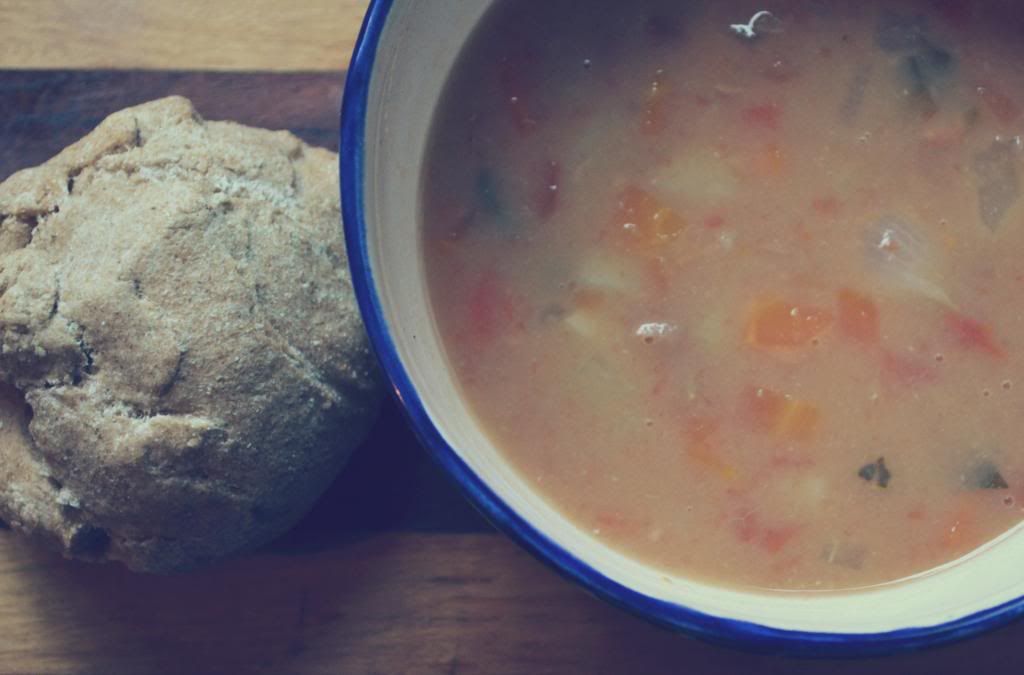
I love to eat. I love comfort food. I also love simple, homemade, organic, fresh, yummy and, if possible, easy. I find that making a batch of organic beans and freezing them has made my life easier in many ways. I know right of the stove is waaay better, but sometimes my life isn´t precisely one that seems to have plopped (yes, just like poo does) out of a beautiful cookbook with gorgeous photography and a perfectly well groomed cook on the back cover. So, I have my reserve of organic, homemade freezer food for those not so stylish and under control days of my mama bear life. Yesterday (being one of those poo-poo days) I had to juggle many things, but really felt like warm comfort food and bread fresh out of the oven. So I went for diving into organic bread making and decided that´s all I could dedicate any real time to (if I didn´t want to turn into the wicked witch of the west south by the time my kids were ready for lunch). I would just have to go for my version of "fast food" for the rest of our menu. I spruced up a yummy vegan minestrone with the help of my frozen beans. Yum. Yum. Yum. And EASY. 

Amo comer. Amo comida que consuela. También amo lo simple, lo hecho en casa, lo orgánico, fresco, delicioso y, de ser posible, lo fácil. Encuentro que hacer una gran olla de frijoles orgánicos y después congelarlos ha hecho mi vida más sencilla en una variedad de ocasiones. Sé que comer lo recién cocinado es muuucho mejor, pero a veces mi vida no es precisamente una que parece haberse escapado de un hermoso libro de cocina lleno de fotografía asombrosa y una cocinera perfectamente bien aseada y peinada en la contraportada. Así que tengo mis reservas de comida orgánica hecha en casa congelada, para aquellos días en mi vida de mamá oso que caen en lo menos glamorosos y lo más descontrolado. Ayer (siendo uno de esos días más "guacalita") tuve que malabarear toda una gama de oficios, pero realmente tenía ganas de una comida caliente y pan recién horneado para consolar mi corazón. Así que poté por entregarme a la tarea de hornear pan orgánico y decidí que eso era todo lo que ba a tener tiempo de lograr (si no quería verme convertida en la malvada bruja del oeste sur para la hora en que mis hijos llegaran con panzas llenas de hambre). Simplemente tendría que optar por mi versión de "comida rápida" para lo que restara del menú de la comida y así fue como hice este delicioso y sencillo minestrone vegetariano con la ayuda de mis frijolitos congelados. Deli. Deli. Deli-cioso. Y SENCILLO.

You´ll need:
  • carrots, potatos, tomatos and celery all chopped into small squares
  • onion (just a few slices)
  • 1-2 cloves of garlic
  • beans (previously cooked)
  • fresh basil (chopped)
  • salt
Necesitarás:
  • zanahorias, papas, tomates y apio todo cortado en pequeños cuadritos
  • cebolla (solo unas cuantas rebanadas)
  • 1-2 dientes de ajo
  • frijoles (previamente cocinados)
  • albhaca fresca (en pedazos)
  • sal
All you have to remember is what my dear italiana mamma says: "A good minestrone: if you can poke your spoon into it, and it stays standing, then you´re good to go." (I can never get it to be that thick, but it sure comes out yummy!). So keeping these words of wisdom in mind you want to boil water, but not too much. Take the amount of veggies and beans that are going into your minestrone into consideration. If you need more water you can always add a bit more. The other way around would be a bit tricky.

Add all your veggies to the water as well as the beans, onion and garlic cloves. Add salt (just a bit at a time, tasting as you go) and let boil for a while without covering your pot so that the water reduces and the flavors concentrate. Once your minestrone starts to acquire a creamy texture add the fresh basil and let cook for a while longer. Just let your taste buds and my mamma´s wisdom guide you. Serve hot with bread on the side and let your heart sigh.

Todo lo que tienes que recordar es lo que mi dulce mamma italiana me dice: "Un buen minestrone: si metes tu cuchara en el centro y permanece parada, entonces te salió bien." (nunca logro que me salga tan espeso, ¡pero si me sale delicioso!). Así que menten estas palabras de sabiduría en mente y pon a hervir agua, no pongas demasiada. Toma en cuenta la cantidad de verduras y frijoles que incoroporarás a tu minestrone. Si necesitas más agua, simepre le puedes añadir. ¿Quitárselo? Eso ya es un poco mas complicado.

Añade todas tus verduras al agua, así como los frijoles, la cebolla y los dientes de ajo. Añade la sal (solo un poco a la ves, dándole probaditas de ves en cuando) y deja hervir por un rato sin tapar para que así reduzca el agua y los sabores se concentren. Una ves que tu minestronecomienza a dquirir una consistencia algo espesa, añade la albhaca fresca y deja cocinar un tiempo más. Solo dejate guiar por tus papilas gustativas y la sabiduría de mi mamma. Sirve caliente con un buen pedazo de pan a un lado y deja que suspire tu corazón.

Note: I, in no way, am a cook. What I do is respect my deep passion for experimenting and constantly searching for yummy and healthy. I have loads of fun in the process and am in love with sharing. So, with this in mind, you can all give it a go if you so desire. A´mangiare!

Nota: No soy, ni seré, cocinera. De ninguna manera. lo que hago es respetar mi profunda pasión por la experimentación y mi constante búsqueda por lo rico y sano. Me divierto un mundo en el proceso y amo el poder compartir. así que, con eso en mente, pueden hecharse el clavado conmigo si así lo desean. A´mangiare!

Saturday, February 2, 2013

making the boo-boo go away: natural vs chemical

adiós al "boo-boo": natural vs. químico

Photobucket
Photobucket

So here goes. Once upon a time A month and a half ago I came to the point where, after having tried to deal with a very odd "rash" developing on my little G´s armpit with natural ointments, a worried mama bear (me)  decided that, since I had been doing this for 2 months to no avail (it had begun to grow), it was time for a doctor´s appointment. I was not too keen on going because I felt in my heart the word "antibiotic" would inevitably be pronounced. But I needed to know what the rash was all about and not keep worrying guessing. And, to no surprise, 30 minutes after we walked in the doctor´s door, we walked out with a prescription for antibiotics. Apparently the rash (that turned out to have a name: boils) had become immune to my natural focus on health and needed to be attacked from a different "perspective". Fast forward 5 days: boils were gone, nasty cold had arrived. You see my relationship with antibiotics is not a friendly one. Although I am aware that they can save lives, I am also painfully aware of the serious damage they cause on the immune system. A little light on the subject:

Antibiotics indiscriminately kill bacteria, both good and bad. The antibiotics that have been touted as the savior of mankind from disease are costing us in cancer and degenerative, chronic diseases.
Once the very first antibiotic is administered to the infant or child, the bacteria in the gut is wiped out and the immune system is permanently altered in its ability to manufacture appropriate immune cells. Fungus in the gut is now unopposed and begins to proliferate unchecked by the friendly bacteria. After fungus sets up strongholds then parasites move in to share the bounty of food and minerals meant to feed the body. This is the first step for chronic disease and cancer.

The same process happens when an adult takes even one round of antibiotics. Everything changes permanently and takes years of targeted nutrition and probiotic therapies to recover a semblance of normalcy in the body systems. (source here)

Aquí va. Había una vez Hace un mes y medio llegué al punto donde, después de haber tratado de controlar una muy extraña roncha que tenía G chica en su axila con pomadas naturales, una mamá osa preocupada (yo) decidió que, ya que llevaba 2 meses untando pomadas sin resultado (la roncha había comenzado a crecer), era hora de ver al doctor. No me encantaba la idea porque en mi corazón sentía que la palabra "antibiótico" sería pronunciada. Pero necesitaba saber de qué se trataba esta roncha y dejar de preocuparmejugar a adivinar . Y, para mi "sopresa", 30 minutos después de entrar por la puerta del consultorio, salimos con una receta para anitbióticos. Aparentemente la roncha (que resultó tener un nombre: forúnculo) se había vuelto inmune a mi enfoque natural de la salud y necesitaba ser atacado desde un frente diferente. Cinco días mas tarde: forúnculos no más, bienvenida gripe terrible. Verás, mi relación con los antibióticos no es una amistosa. A pesar de estar consciente de que pueden salvar vidas, también estoy dolorosamente consciente del daño tan serio que pueden causar en sistema inmunológico. Un poco más de luz al tema:

Los antibióticos eliminan bacterias indiscriminadamente, tánto las buenas como las malas. Los antibióticos que nos han vendido como los salvadores de la humanidad en cuanto a la enfermedad, nos está está cobrando con cáncer y enfermedades degenerativas y crónicas. Una ves que el primer antibiótico es administrado a un bebé o niñ@, la bacteria en el intestino es arrasado y el sistema inmune queda permanentemente alterado en su capacidad de crear celulas inmunes apropiadas. El hongo en el intestino ahora no encuentra oposición y comienza a proliferar sin la censura de bacteria amable. Después de que los hongos crean su fortificación, entonces los parásitos llegan a compartir la recompensa del alimento y minerales destinados a alimentar al cuerpo. Este es el primer paso hacia la enfermedad crónica y el cáncer.

El mismo proceso se lleva a cabo cuando un adulto se administra siquiera una ronda de antibióticos. Todo cambia permanentemente y toma años de nutrición enfocada y terapias probióticas para recuperar un semblante de normalidad en el sistema del cuerpo. (fuente de información en inglés aquí)
So, what happened next? I mean, this happened a month and a half ago, right? Well, to make a long story "short", it has been a month and a half of a down hill roller coaster ride, and not in the least bit fun. It was the nasty cold that preceded the antibiotic, which I tended to with homeopathy (but seemed to have only a quarter part of the effect it normally has on my little girl), and never fully left (it followed us to the beach, uninvited, I might add), followed by the one and only dengue fever that followed us back from the beach (yes, also uninvited). This sucker was also attacked by homeopathy but the very high fever it came with had to be controlled with Motrin (yuck). Then, when little G was barely in her 2nd day after the crisis (it´s about 2-3 days of crisis, and then about a week after that of tolerable symptoms) she started with a fever again + a terrible strep throat + very painful gastritis, ended up at the doctor´s again who told me it was a strong virus going around that would require 2 different anti-inflamatories (in other words, Motrin + a friend of his) 3 times a day for 5 days (yes, really). I basically nodded my way through the appointment then went and gave G only 2 days of only 1 anti-inflamatory, only 2 times a day. Sue me. G got "better", and finally got the chance to go back to school. Second day of school, she came back with influenza she got from some poor kid. This time I said NO WAY. I ran off with my homepathic-angel-doctor and took the scary, looong way around this one. I knew in my heart that if I continued to "play it safe" (as many would have expected me to, especially after such a long period of continous illness) I was gambling with little G´s life and it would only get worse as it did with big G. So we spent the next 3 days going through a quite horrid detox + influenza with nothing more than homeopathy (adjusting our dosis and medications as soon as her symptoms changed a bit, on the phone 24/7 with angel-doctor), oral saline solution, massages, a very nervous daddy "threatening" me with the big D word (doctor) and natural medicine for other symptoms. And we came out triumphant. Now I´m making sure I get her immune system back on track and catching up on sleep. Well, sorta. It´s 5 am right now. 

Entonces, ¿qué sucedió después? Digo, esto sucedió hace un mes y medio, ¿no? Pues en "pocas" palabras, ha sido un mes y medio en una montaña rusa en picada, y ni un poco divertido. Fué el resfrío horrendo que precedió al antibiótico, el cuál atendí con homeopatía (pero que parecía tener solo una cuarta parte  del efecto que normalmente tiene sobre mi niña), y nunca realmente se fué (nos siguió a la playa, sin invitación, debo aclarar), seguido por nuestro famoso dengue que nos siguió de regreso de la playa (también sin invitación). Este monstruo también fue atacado por homeopatía pero las fiebres altas se tenían que controlar con Motrín (fuchi). Después, cuando G chica estaba recién en su segundo día después de la crisis (la crisis dura de 2 a 3 días, seguido de aproximadamente 1 semana de simptomas tolerables) le dió fiebre + mucho dolor de garganta + una gastritis terrible, terminó con el doctor otra vez, quien me dijo que lo que tenía era un virus fuerte que estaba "de moda" que requeriría 2 distintos anti-inflamatorios (en otras palabras, Motrín + un amiguito) 3 veces al día, durante 5 días (si, en serio). Yo básicamente asentí durante toda la consulta, después fui y le dí a G solo 2 días de solo 1 anti-inflamatorio, solo 2 veces al día. Demándame. G se "mejoró" y finalmente tuvo la oportunidad de regresar a la escuela. Después del segundo día en la escuela regresó con una influenza que le contagió algún pobre niño. Esta vez dije, BASTA.  Corrí con mi doctora-angelito-homeopática y tomé el camino laaaargo y temeroso para salir de ésta.  Sabía en mi corazón que si seguía por el "camino seguro" (como muchos hubieran esperado de mi, especialmente después de una racha tan larga de enfermedad) estaría jugando y apostando con la vida de G chica y solo empeoraría, como fué en el caso de G grande. Así pasamos los siguientes 3 días pasando por una tormentosa desentoxicación + influenza sin nada más que homeopatía (ajustando las dosis y medicamentos en cuanto había algún cambio en simptomas, en el teléfono 24/7 con doctora-angelito), suero oral, masages, un papito muy nervioso amenazándome con la gran "D" (doctor) y medicamento natural para simptomas adicionales. Y salimos triunfantes. Ahora me estoy asegurando que su sistema inmunológico se vuelva a regular y recuperando el sueño. Bueno, mas o menos. Ahora son las 5 am.
This has all helped me confirm that a "normal" focus on health, or illness, (antibiotics, anti-inflamatories, etc.) and the total inability of modern medicine to accept that these things DO in fact harm the immune system -amoung other side effects- are not the solution, but only a great part of the problem. I confronted the doctor with this and, yes, he basically looked at me like, "oh, it´s the crazy hippie mama again", gave me a whole bunch of crap wrapped in medical jargon and sent me home, totally unaware of the fact that I´m more like the "very smart mama not afraid to speak her mind that did not buy all the bull he was trying to sell". There is no way another child of mine is going to be a victim of "normal". Thankyou mama for teaching me to think outside of the box, not just swallow everything the system hand feeds me, and to venture way out of my comfort zone. Gracias.

antibiotics side effects: here
antibiotics and the immune system: here 

Todo esto me ha ayudado a confirmar que un enfoque "normal" de la salud, o la enfermedad, (antibióticos, anti-inflamatorios, etc.) y la total incapacidad de la medicina moderna de aceptar que estas cosas SI afectan el sistema inmune - entre otros efectos secundarios- no son la solución, sino una gran parte del problema. Confronté al doctor con esto y, si, básicamente me miró con cara de, "ay, no, ahi viene la loca-mamá-hippie otraves", me entregó un montón de absurdo envuelto en términología médica, y me mandó a casa, totalmente inconsciente del hecho de que soy más bien "la mamá con cierta inteligencia, sin miedo a decir lo que piensa, que  no compró el montón de ridículo que me pretendía vender". De ninguna manera permitiré con otra criatura mía sea víctima de lo "normal". Gracias mamá por enseñarme a pensar "fuera de la caja", a no simplemente tragar por reflejo lo que sea que el sistema me ponga en la boquita, y aprender a andar lejos, muy lejos de mi zona de confort. Gracias.

efectos secundarios de los antibióticos (inglés): aquí
antibióticos y el sistema unmunológico (inglés): aquí

Sunday, January 20, 2013

tuna + a can / atún + una lata

Photobucket
I love reading into subjects I find are not only important, but that also help me reafirm my position as far as the importance of eating fresh, local and organic. I tend to find myself against a rock and a hard place when people ask me about why i don´t feel right about feeding my family canned tuna (or anything canned for that matter). The thing is, up until recently, it had always been just that: my instincts telling me no. But then I would get these arguments shot back at me. "You shouldn´t deprive your children of tuna. Don´t be so drastic. Tuna is a lean protein, low in saturated fat. It´s a good source of selenium and one of the few foods that is naturally rich in vitamin D, and more importantly, tuna provides omega-3 essential fatty acids." Oh my. Time to start reading up on why canned tuna (or canned anything) just does NOT convince me, so that I can be sure that my decision is one taken froman informed place. So here is I what I found as far as canned foods in general goes:

 ...Maybe you´ve stopped using plastic water bottles and eating canned food. But if you haven’t yet made a change, or your vigilance has lessened, listen up: A new study implicates BPA as negatively affecting the health of not just those who ate BPA-laden food but also of four generations of their children. Considering that BPA is found in 90 percent of Americans’ blood, that’s a lot of children who could potentially be impacted by an innocent-seeming can of spaghetti and meatballs."
"The new study, published in the journal Endocrinology, examined the trans-generational effects of BPA on mice...some of the behavioral issues they saw in all generations of mice were similar to those seen in autistic children and children with attention-deficit hyperactivity disorder. 'Autism is characterized by a reduction in social interactions and we observed some declines in social interaction in the BPA-exposed mice,' says Emilie F. Rissman, the study’s lead investigator and a professor of biochemistry and molecular genetics at the University of Virginia School of Medicine. (*1)

A new study spearheaded by the Environmental Working Group found the toxic chemical bisphenol A (BPA) in over 50 percent of the name-brand canned goods tested. In some cases, a single serving was enough to expose a woman or infant to BPA levels that were 200 times higher than the government's safe level for industrial chemicals.

BPA is an industrially produced chemical commonly used in polycarbonate plastics and epoxy resins. BPA-containing resins are a common ingredient in the linings of canned goods. (It) is a known estrogen mimicker, and can cause hormone-disrupting effects, toxicity or even neurotoxicity, low sperm counts and cancer. More than 200 animal studies show that BPA is toxic at very low doses, and the Centers for Disease Control explains that it has found BPA in 95 percent of patients being tested at levels that raise health concerns. The FDA estimates that 17% of the U.S. diet comes from canned food, but there is no government safety standard regulating the amount of BPA allowed in such foods. (*2)
Statements and opinions by Mike Adams, author of Grocery Warning: How to identify and avoid dangerous food ingredients

• It is worth noting that bisphenol-A is only found in processed, manufactured foods and packaging. Consuming fresh, raw produce avoids the ingestion of bisphenol-A.

• Food packaging that has long been considered "safe" by the FDA is now being found to be surprisingly hazardous to human health. As a general rule, the more fresh food you eat and the less processed, packaging food you eat, the lower your risk will be for cancer, heart disease, diabetes, neurological disorders and many other diseases. (*3)

Now lets talk about canned tuna (or fish in general). I will avoid repeating all the boo-boos related to canned foods and just go directly on to fish:
Tuna can ... be contaminated with mercury. Because canned tuna is so commonly consumed, it's the main source of mercury in people's diets.


Methylmercury
Mercury exists in three forms: elemental or metallic mercury, inorganic mercury compounds and organic mercury compounds. Methylmercury, an organic mercury compound, is the type that accumulates in tuna and other fish. Fish higher up in the food chain, such as sharks, swordfish and tuna, have higher levels of mercury contamination because they absorb the mercury from the prey fish they consume. The effect that methylmercury exposure has on your health depends on several factors, including the dose, your age, the duration of exposure and your overall health.

Poisoning in Adults


Adults with mercury levels above the Environmental Protection Agency Reference Dose, which is the dose that's likely to be without appreciable risk, are often asymptomatic or have nonspecific symptoms. When symptoms do present, they can include changes in behavior, headaches, memory loss, visual field constriction, loss of fine motor control, unsteady movements, tingling or numbness of the extremities and lips and hair loss. A study published in The New England Journal of Medicine in 2002 found that subjects with 15 percent higher mercury levels than the controls had an increased risk of myocardial infarction.
Poisoning in Fetuses, Nursing Infants and Children
Fetuses, infants and children are at the most risk from the toxic effects of methylmercury. Methylmercury in a woman's body passes to the fetus and to a nursing infant through breast milk. Minamata disease can occur from prenatal exposure to high levels of methylmercury, with symptoms that include problems with speech, sucking and swallowing; blindness and deafness; excessive skeletal muscle tone; overresponsive reflexes; mental retardation and seizures. Lower levels of prenatal methylmercury exposure can cause decreased attention span, delayed learning and language acquisition, memory problems, and impaired motor control. Methylmercury poisoning in children can result in kidney damage and problems of the digestive and nervous systems. (*4)


One of the problems with mercury toxicity is that the symptoms are so general you could put them down to any number of things – like stress, or the flu, or allergies. The symptoms include:


  • Tremors
  • Changes in vision or hearing
  • Insomnia
  • Weakness
  • Memory problems
  • Headache
  • Nausea
  • Vomiting
  • Diarrhea
  • Increases in blood pressure or heart rate
  • Eye irritation
  • Irritability
  • Shyness
  • Nervousness
  • Breathing problems
  • Painful mouth
  • Abdominal pain
  • Fever and/or chills
  • Acrodynia – caused by chronic or long-term exposure to mercury. The symptoms for this include itching, swelling, flushing, pink colored palms, excessive perspiration, rashes irritability, fretfulness, sleeplessness, joint pain and weakness.
  • Some children may experience trouble learning in school
Having said all this, fish and shellfish are an important part of a healthy diet because they contain good quality protein and essential nutrients including omega 3 fatty acids, and are low in saturated fats. As the Food and Drug Administration (FDA) in the United States points out "nearly all fish and shellfish contain traces of mercury. For most people, the risk from mercury by eating fish and shellfish is not a health concern."

However, the FDA and the U.S. Environmental Protection Agency (EPA) have posted information on mercury poisoning. They recommend that pregnant women, women of childbearing age, nursing mothers, and young children limit the amount of fish they eat, because of the danger of mercury poisoning. (*5)

I know, because it has happend to me, that reading this sort of thing can make one feel angry, bereft of options and maybe considering the posiblility of just looking the other way. That is definitely a choice one has to make. I, for one, after having passed the stage of frustration, prefer the "discomfort of knowing" than living with my eyes closed. We are actively looking for options. We´ve been blessed with a small piece of land, but big enough to be able to build a fish pond that can hold fish (carp and such). I´m not going to lie, sometimes making the "right" choice can make you feel like you´re taking the long, hard way around. But I´d feel like I were betraying myself if I became a slave of my own need for comfort and decided to give in to "normal". Just a thought.

Photobucket
sources:
*1 here, *2 here, *3 here, *4 here, *5 here
interesting article on canned tuna here